Property Refurbishment Slough: What to Check Before You Buy a Renovation Property
Buying a dated property can be a smart route to a better layout, improved living space and a home that suits you properly, but only if you know what you are taking on. If you are researching property refurbishment Slough options before committing to a purchase, the right checks can save you from expensive surprises after exchange. What looks manageable on a viewing can quickly become a much bigger job once walls are opened, services are tested and the true condition of the building is clear.
At Sub Build Ltd, we work with homeowners and buyers on refurbishments, renovations, structural alterations, groundworks and design and build projects. We also provide new homebuyers reports with associated costs and survey input for new homebuyers, helping people in Slough make better decisions before work begins.
Property refurbishment Slough: why early checks matter
Most renovation properties are sold on potential. A better kitchen, a more open layout or a full modernisation can be appealing, but the purchase decision should not be based on finishes alone.
Before you commit, you need to understand three things: the condition of the building, the likely scale of work and whether the budget still makes sense once the hidden items are included. That is where early planning makes a real difference.
1. Start with the structure, not the decoration
Look for signs that the property may need more than cosmetic work
Fresh paint can hide a lot. When viewing a property to renovate, pay close attention to issues that may affect scope, timing and cost.
Cracks around doors, windows or ceiling lines
Uneven floors or sloping areas that feel out of level
Signs of movement around rear walls or previous additions
Sagging ceilings, distorted openings or patch repairs
Evidence that walls, chimney breasts or openings may have been altered before
Not every defect means major structural work is required, but it does mean you should investigate properly before assuming the project is straightforward.
Think about the changes you want to make
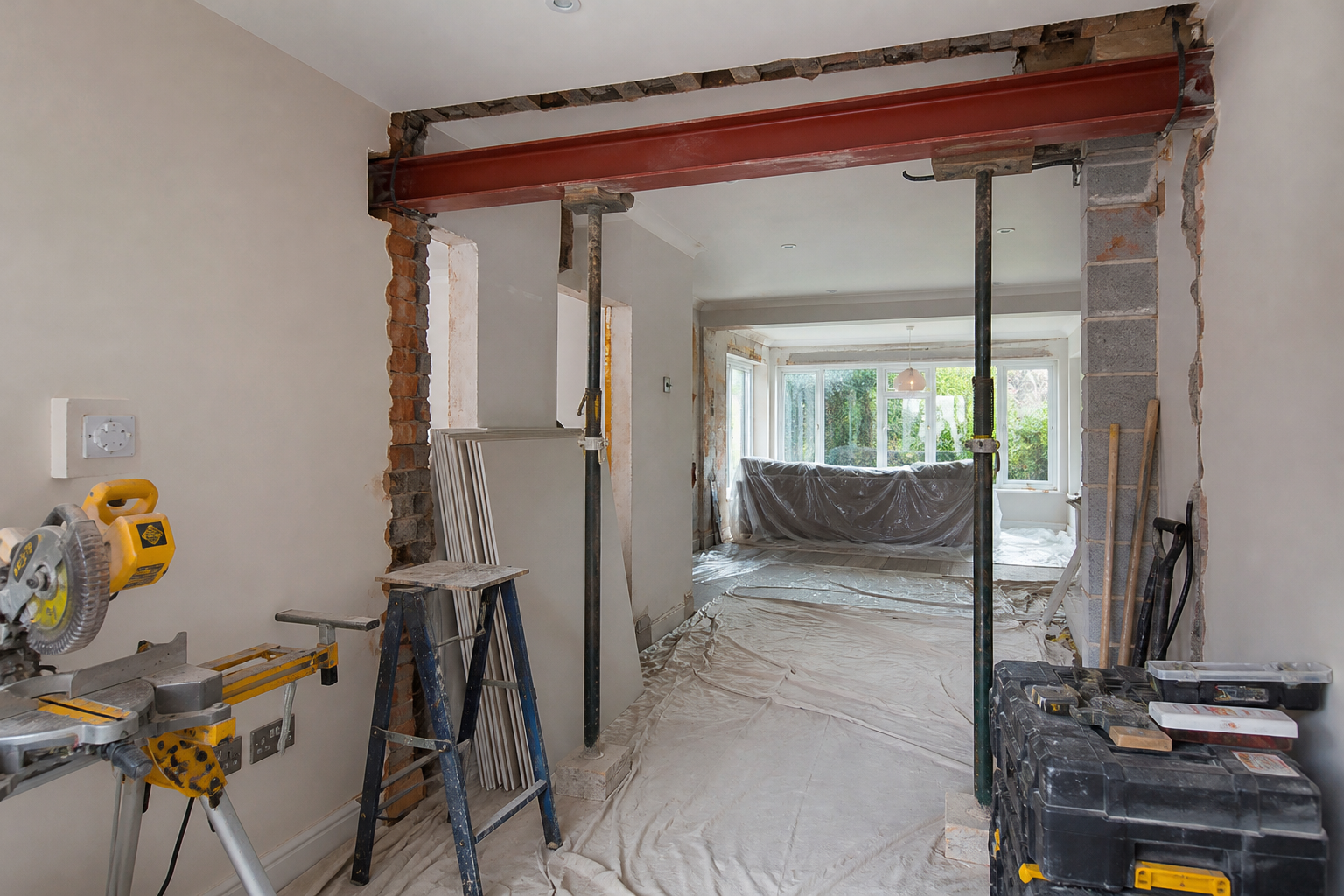
If your plan involves opening up rooms, widening openings or reworking the ground floor, the structural side of the project needs to be considered early. Internal walls may be load-bearing, and the support solution affects cost, sequencing and approvals.
This is especially important if you want to combine a refurbishment with structural alterations. A property that looks ideal on paper may need a more involved solution once the loads, supports and existing layout are properly assessed.
2. Check the services you cannot see
Electrics, plumbing and heating
Many refurbishment budgets go off track because the visible upgrade is priced first and the service upgrades are treated as an afterthought. Older properties often need more than a new kitchen or bathroom. Rewiring, pipework changes, heating updates and ventilation improvements can all become necessary once the work starts.
Ask practical questions during viewings and surveys. Has the property been updated in stages? Are sockets, radiators or pipe runs obviously dated? Has there been a leak or repair history? Even where the property is habitable, that does not mean the services are aligned with a full refurbishment standard.
Damp, drainage and water ingress
Water-related issues can be particularly disruptive because they affect finishes, joinery and the sequencing of other trades. Look out for staining, musty smells, blown plaster, bubbling paint, damp patches around openings and any sign of drainage issues externally.
Where kitchens, bathrooms or utility areas are being reconfigured, drainage routes also matter. A layout that seems simple may require more below-floor or external work than expected.
3. Check whether the layout really suits the refurbishment plan
One of the biggest mistakes buyers make is assuming that a property can be reshaped easily because the rooms look awkward rather than because the structure allows it.
Before you commit, test the layout against what you actually want from the house:
Do you want an open-plan kitchen, dining and living space?
Will walls need to be removed or openings widened?
Is there enough natural light in the areas you want to prioritise?
Will bathrooms, utilities or stairs need major relocation?
Is the existing footprint workable, or are you really considering an extension as well?
A proper refurbishment plan is not just about modernising finishes. It is about whether the property can work better once the build is complete. If you need both internal reconfiguration and extra space, an early conversation about design and build projects can help you avoid buying a property that falls short of your long-term goals.
4. Understand approvals, access and practical constraints
Planning and building regulations
Not every refurbishment needs planning permission, but many renovation projects still require formal approvals. Structural changes, new openings, drainage alterations, extension works and significant layout changes may all trigger a level of compliance or control that should be considered before purchase.
If the property is attached or closely bordered, it is also sensible to think ahead about shared walls, neighbouring properties and how the work will be carried out without avoidable disruption.
Access, parking and site logistics
Access affects cost more than many buyers expect. Narrow side passages, limited storage space, parking restrictions and restricted rear access can all slow a project down or change how materials, waste removal and sequencing are managed.
These details are easy to overlook when you are focused on the house itself, but they matter on real refurbishment jobs in established residential areas around Slough.
5. Budget for the hidden parts of the project
A sound refurbishment budget should cover more than the attractive end result. Buyers often price the visible upgrades first and underestimate the enabling works that come before them.
Common cost areas to think about include:
Strip-out and making safe
Structural support where layouts are altered
Rewiring, plumbing and heating changes
Plastering, joinery and making good after alterations
Window, roof or drainage repairs if defects are uncovered
Groundworks where drainage or external levels need attention
A sensible contingency for issues that only become clear once the build opens up
This is why early contractor input matters. If you buy on an optimistic figure and later discover the property needs more structural or service work than expected, the project can become harder to deliver to the standard you want.
Our approach is to give free initial indications, then provide transparent fixed-price quotations after a full site survey. That way, the scope is discussed on a more realistic basis rather than guesswork.
6. Speak to a refurbishment contractor before you exchange
The best time to ask questions is before you are fully committed. Even a short early discussion can help you sense-check the purchase and identify where a survey or more detailed inspection is sensible.
At Sub Build Ltd, we support buyers and homeowners with property refurbishment services, renovations, structural alterations, extensions, groundworks and new builds. We also provide new homebuyers reports with associated costs and survey input for new homebuyers.
An early conversation can help you think through:
Whether the property is likely to need cosmetic, moderate or major refurbishment
How your proposed layout changes may affect structure and services
What order the work is likely to follow
Whether the budget appears aligned with the level of work
Whether you should wait for further survey information before making a final decision
This kind of input is particularly useful if you are deciding between several properties and want to understand which one offers the most realistic refurbishment route.
Why choose Sub Build Ltd for refurbishment planning in Slough?
We are a Slough-based building and construction contractor covering refurbishments, renovations, structural alterations, extensions, groundworks, new builds and wider construction projects. For buyers and homeowners, that breadth matters because refurbishment work often overlaps with several stages rather than sitting neatly in one category.
35 years' regional experience across residential building and refurbishment work
End-to-end design and build support with a single point of contact
New homebuyers reports with associated costs and survey input for buyers
Transparent pricing through fixed-price quotations after a full site survey
Established local reputation with significant work generated through referrals and word-of-mouth recommendations
Professional memberships including The Guild of Master Craftsmen and the Association of Master Tradesmen
If you are buying in Slough and want experienced input before starting a major renovation, we can help you assess the likely scope and next steps clearly.
Frequently asked questions
Should I get a survey before buying a house to renovate in Slough?
Yes. A survey helps you understand the condition of the building before you commit. If you are planning substantial changes, it is also useful to speak to a contractor early so the survey findings can be viewed in the context of the refurbishment you want to carry out.
Can I ask for refurbishment advice before exchange?
Yes. In many cases, an early discussion is the best point to raise questions about scope, likely cost drivers and whether the property suits your plans. It will not replace a formal survey, but it can help you make a more informed decision before exchange.
What usually creates the biggest refurbishment surprises?
The biggest surprises are usually hidden rather than cosmetic. Structural issues, outdated electrics, plumbing changes, drainage problems, water ingress and access constraints are all common reasons why a straightforward-looking project grows in cost and complexity.
Is it worth getting one contractor involved for refurbishment and structural changes?
Where a project includes reconfiguration as well as refurbishment, a single point of contact can make the process easier to manage. It helps with sequencing, communication and keeping the scope aligned from the early survey stage through to the build.
Can Sub Build Ltd help if I am comparing several renovation properties?
Yes. If you are weighing up different options in Slough, an initial discussion can help you understand which property appears more practical for the type of refurbishment or structural work you have in mind.
Conclusion
Buying a property to renovate can be an excellent opportunity, but only when the decision is based on the real condition of the building and the real cost of the work. Looking beyond finishes, asking the right questions and getting early professional input can save a great deal of stress later.
If you are buying or planning to refurbish a property in Slough, request an initial discussion with Sub Build Ltd. We can help you assess the scope, identify likely issues and plan the next step with greater confidence.