
Keep water where the design intended
Wet areas detailed
We prepare suitable backgrounds and waterproof the areas that need it.
Drain falls checked
We set waste routes to clear water reliably from showers and fittings.
Ventilation considered
We plan moisture control alongside the room layout and electrical work.
Choose a layout that handles water and people
A family bathroom, en-suite and wetroom each place different demands on the available space. We plan access, storage, sanitaryware and daily capacity before fixing pipe positions. Wetrooms need carefully formed falls and water containment, while compact en-suites depend on sensible clearances and ventilation. Family rooms may need a bath, shower and storage without turning the doorway into an obstacle course. We compare the intended use with existing drainage and water routes, helping the layout work technically as well as on paper.
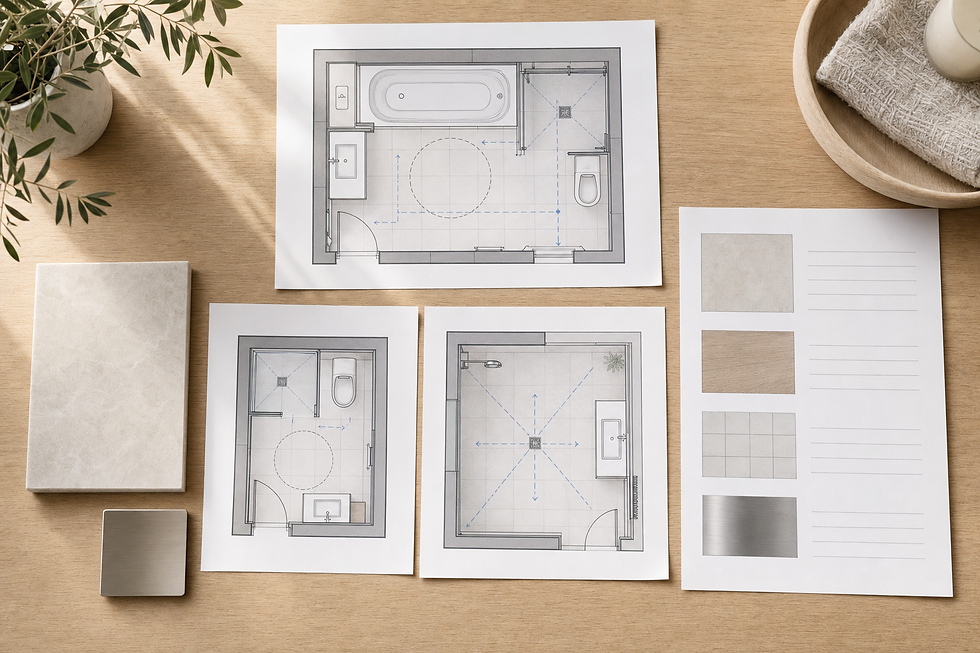

What sits behind the tiles matters most
We strip out the old room before adjusting plumbing routes and drainage falls. Suitable substrates, waterproofing and electrical work then create the background for tiling, decoration and fitting. We pay particular attention to wet-area details, ventilation and electrical zones because small shortcuts here can damage a good-looking finish. Simple refits may take a few days, while full strip-out, replastering, waterproofing and tiling commonly take a few weeks. We confirm the likely sequence after surveying the room, then complete final testing and commissioning.
Frequently asked questions
How long can a bathroom renovation take?
A straightforward refit may take a few days. A full strip-out with replastering, waterproofing, extensive tiling and service changes commonly takes a few weeks. We set expectations after inspecting the room.
What makes a wetroom different from a bathroom?
A wetroom relies on formed falls, proper waterproofing and carefully detailed junctions to contain and drain water. We assess the floor build-up, waste route, access and surrounding structure before confirming suitability.
Can plumbing positions be changed?
Often, yes, but the practical options depend on water supplies, waste sizes, drainage falls and the floor or wall construction. We survey existing routes before settling the new layout and quotation.